
There’s no shortage of turbulence in British manufacturing. Over the past decade, leaders in the sector have had to guide their companies through an almost surreal sequence of challenges: Brexit, a global pandemic, geopolitical instability, persistent supply chain disruption, skills shortages, inflationary pressures, and an energy crisis that continues to bite.
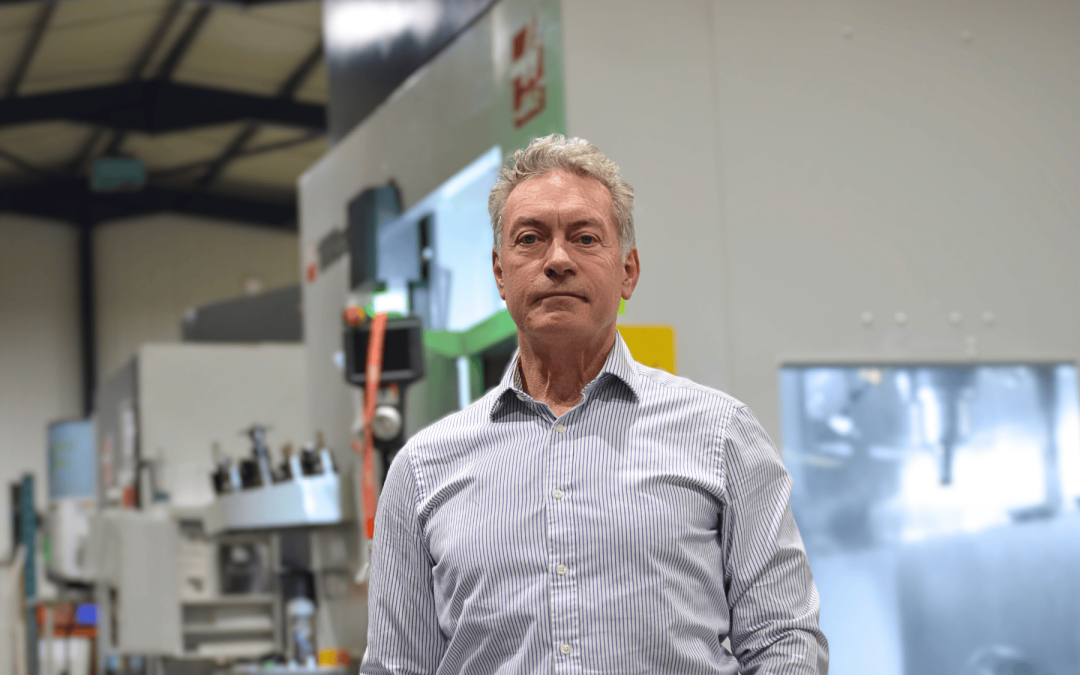
It’s no wonder that Shaun Rowley, Managing Director of ANT Industries, says many in his position must be hoping to “wake up from the ongoing bad dream of challenges.”
And yet — against this backdrop — many are quietly, steadily, moving forward and growing,
ANT Industries, based in Atherstone, is a case in point. The firm, which specialises in the manufacture of precision aero engine components, is currently experiencing record growth. But Rowley is quick to point out that this success hasn’t come in spite of the chaos — it’s come through it, and often because of a mindset shared by many in UK industry: resilience, calm under pressure, and a long-term view when others might panic.
“The last few years have demanded courage, stoicism, luck, and no small appetite for risk,” Rowley reflects. “There’s no playbook for this. Every day brings something new — whether it’s another material shortage, a delay on imported components, or the latest energy market shock. And still, we carry on.”
That sentiment will resonate with manufacturers of all shapes and sizes. Whether you’re machining high-spec aerospace components — as ANT does — or producing food, textiles, or electronics, the challenges are consistent. Disrupted supply chains, tight labour markets, and uncertain policy direction have all added layers of complexity to decisions that used to be routine.
And while companies can invest in new machines or retool production lines, there’s no substitute for steady leadership. This is perhaps the unspoken truth of British industry today: that behind every firm that has stayed the course is a management team that’s made hard choices, absorbed pressure, and shown up each day without knowing what fresh uncertainty might be waiting.
In Rowley’s own business, delivering for global aerospace customers like ITP Aero and Siemens means getting things right, every time. There’s little room for error when machining prismatic components to micron-level tolerances. But what he’s quick to highlight is not the machinery or the technical complexity — it’s the people, and the mindset.
“There’s an artistry to this work. A problem-solving instinct. And that applies just as much to running the business as it does to machining a component.”
In many ways, this could be said of the entire sector.
Manufacturing doesn’t shout as loudly as other parts of the UK economy. It rarely makes headlines unless the news is particularly bad. But it is, quietly, and under enormous pressure, still delivering — for customers, for export markets, and for employees across the country.
That doesn’t mean the journey is getting easier. As the UK stares down an uncertain geopolitical future, growing skills gaps, and questions about its long-term energy strategy, business leaders are right to ask: what’s next?
No single business can insulate itself from the wider currents. But what’s becoming clear is that the resilience of UK manufacturing rests on the judgment, grit, and persistence of the people running these firms- not policy.
And perhaps that, more than any quarterly result or investment announcement, is what deserves recognition.