
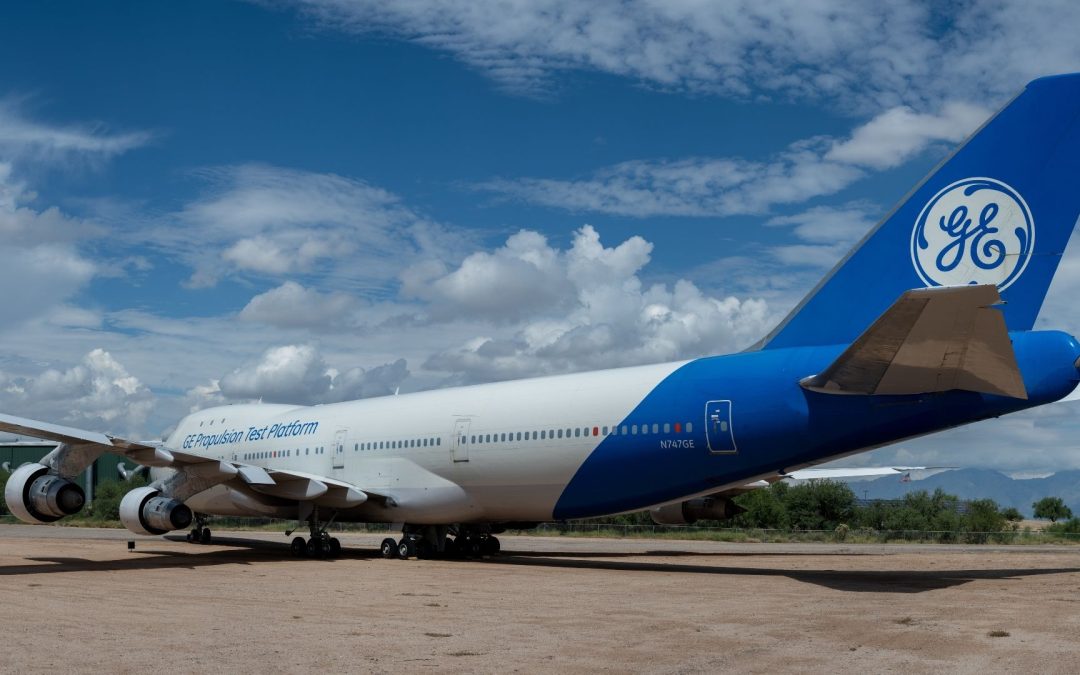
In a quarter defined as much by momentum as by resilience, GE Aerospace has offered a timely reminder of its enduring role at the heart of global aviation.
The company’s first-quarter 2026 results point to a business not only growing, but deepening its relevance across the aerospace ecosystem. With orders surging and a substantial services backlog continuing to expand, the narrative is less about short-term performance and more about long-term confidence—confidence in platforms, partnerships, and the future of flight itself.
For companies like ANT Industries, which operate within this intricate supply chain for major global players such as GE Aerospace, such results carry a significance that goes beyond the headline numbers.
Shaun Rowley, Managing Director of ANT Industries, sees the announcement as a reflection of something broader than financial success.
“What stands out with GE Aerospace is the consistency of their vision,” he explains. “When you see that level of order growth and long-term backlog, it reinforces confidence right across the supply chain.”
At the centre of GE Aerospace’s performance is a clear focus on operational discipline and customer value—principles embedded in its FLIGHT DECK approach. The emphasis on durability, efficiency and lifecycle performance mirrors the priorities of precision manufacturers tasked with delivering components that must perform flawlessly under extreme conditions.
Rowley adds:
“From our perspective, it’s about alignment. The expectations placed on suppliers like us are rightly high, but they’re also consistent. That allows businesses like ANT Industries to invest with confidence, to refine processes, and to continuously raise the bar in terms of quality and repeatability.”
The scale of GE Aerospace’s commercial wins—spanning hundreds of engines and long-term service agreements—also highlights the durability of demand in civil aviation, even amid a complex global backdrop. For UK-based engineering firms, this translates into sustained opportunity, underpinned by programmes that stretch decades into the future.
Yet it is perhaps the quieter detail within the results that resonates most: a growing backlog, persistent demand for services, and a recognition that supply remains constrained. These are the signals of an industry still recalibrating after disruption, but doing so with purpose.
“There’s a real sense of forward momentum,” Rowley continues. “Programmes today are about longevity and performance over time. That’s where British engineering continues to play a vital role, and it’s something we’re proud to contribute to.”
As GE Aerospace navigates a dynamic geopolitical and economic landscape, its steady course reinforces a wider truth: aerospace remains a sector built on collaboration, precision and long-term thinking.
And for those working behind the scenes—machining critical components, refining processes, and supporting the engines that power global travel—this latest chapter is less a conclusion than a continuation of a shared journey.
—