
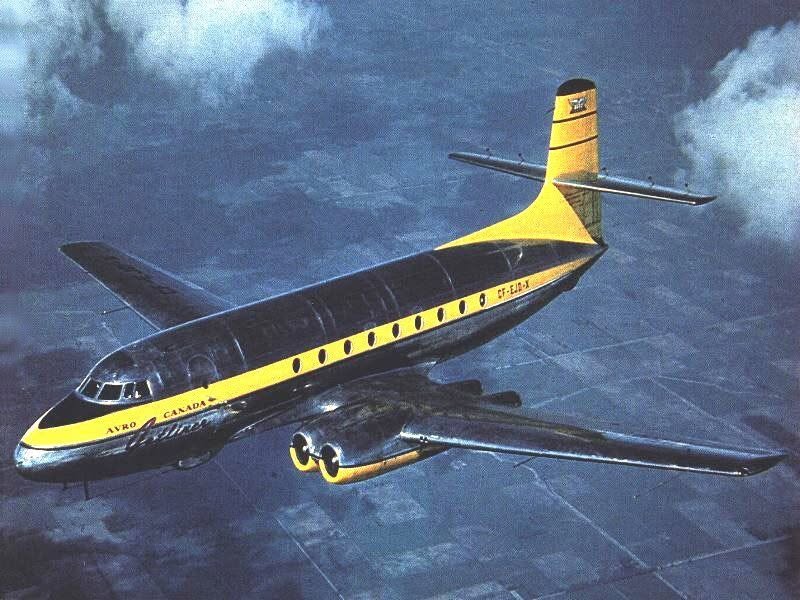
On August 10, 1949, the Avro Canada C-102 Jetliner took to the skies for the first time, becoming North America’s first jet transport and only the second jet airliner in the world, following Britain’s de Havilland Comet by just 13 days.
Eleven years earlier, August 10 also marked the beginning of another remarkable aviation achievement.
A Focke-Wulf Fw 200 Condor departed Berlin for New York, completing a pioneering nonstop transatlantic flight in just under 25 hours and arriving on August 11. The four-engine aircraft demonstrated the rapidly developing potential for long-distance passenger aviation at a time when crossing the Atlantic by air was still an extraordinary engineering challenge.
For Atherstone-based aerospace component manufacturer ANT Industries, the anniversaries offer an opportunity to reflect on the generations of engineering progress that connect those pioneering aircraft with the advanced aero engines and aircraft programmes of today.
Shaun Rowley, Managing Director of ANT Industries, said: “Aviation history is full of moments where engineers looked at what was considered possible and decided they could go further.
“When you think about an aircraft flying nonstop between Berlin and New York in 1938, followed little more than a decade later by the arrival of the passenger jet, you get a real sense of just how quickly engineering can transform an industry.”
The Avro Canada Jetliner represented a particularly important moment in the development of commercial aviation.
Designed and built in Canada and powered by four Rolls-Royce Derwent turbojet engines, its maiden flight placed Canada at the forefront of the emerging jet transport era. The aircraft was conceived as an inter-city passenger jet at a time when propeller-driven aircraft still dominated commercial aviation.
Its significance can still be seen in the aviation industry of 2026, where jet-powered passenger aircraft connect almost every corner of the world and aerospace manufacturers continue to pursue advances in efficiency, performance and sustainability.
Rowley believes that progression also illustrates the importance of the manufacturing supply chain behind every major aerospace achievement.
“People quite rightly remember the aircraft, the designers and the pilots involved in these milestones, but behind every generation of aviation progress sits an enormous engineering and manufacturing ecosystem,” he said.
“Every engine contains components that have to perform exactly as intended. That requires precision engineering, advanced manufacturing technology, inspection, skills and an absolute commitment to quality throughout the supply chain.” That principle has particular resonance for ANT Industries.
From its manufacturing base in Atherstone, the company produces precision components for aerospace applications, including highly specialised aero engine components.
The technologies available to manufacturers have transformed dramatically since the pioneering flights of the 1930s and 1940s, yet Rowley believes the underlying engineering mindset remains remarkably familiar.
Advanced CNC machinery, automation, digital production systems and increasingly sophisticated inspection technology are allowing today’s manufacturers to achieve levels of accuracy, repeatability and productivity that previous generations of engineers could only imagine.
“Technology changes, but engineering curiosity remains,” Rowley said.
“You are always asking how something can be made more accurately, more efficiently and more consistently. That willingness to improve is what took aviation from pioneering long-distance flights to the jet age, and it continues to drive aerospace forward today.”For Rowley, remembering aviation milestones also has another important purpose: demonstrating to the next generation just how much engineering can achieve.
The aircraft flying today are the product of decades of accumulated innovation, while the technologies currently being developed across propulsion, materials, manufacturing and sustainability will help determine what aviation looks like for decades to come.
“The people who engineered those aircraft were working at the frontier of technology in their generation,” Rowley added.
“Today there are young engineers and apprentices entering aerospace who will work on technologies that could become the milestones people talk about 50 or 80 years from now.
“That is what makes aerospace engineering such an exciting industry. There is an extraordinary heritage behind us, but there is always another engineering challenge ahead.
“Days like August 10 give us an opportunity to celebrate how far aviation has travelled and, just as importantly, think about where engineering can take us next.”